From Photography to Hybrid Visual Art

The evolution of a visual language
My journey as an artist began with landscape photography, but from the very beginning my relationship with landscapes was never purely documentary.
When I was young, my imagination was deeply shaped by fantasy literature, especially the works of J. R. R. Tolkien.The idea that landscapes could carry memory, myth and ancient history fascinated me long before I even picked up a camera.
When I started photographing, I realized that certain places in the real world seemed to echo that same atmosphere. Mountain valleys, ancient forests and forgotten ruins sometimes felt like fragments of another world — something older, quieter and more mysterious.
In a way, photography became my way of exploring what I often described as the Middle-earth hidden inside the real world.
Over time this vision began to shape my photographic style.
Instead of simply documenting landscapes, I was drawn to dramatic atmospheres, dark clouds, heavy light and emotional tension. These elements eventually evolved into what many people later called dark processing — a distinctive visual approach where editing was used to reveal the epic and mythological dimension hidden within real places.
But dark processing was never just a technique. It was part of a broader artistic intention: transforming landscape photography into something more evocative, something closer to visual storytelling.

As my work evolved further, this approach slowly developed into what I began to describe as romantic landscape photography.
Inspired by the tradition of romantic painters, these images attempted to evoke forgotten histories and silent civilizations. Ruins, ancient architectures and dramatic natural environments became central elements of my visual language.
The landscape was no longer simply nature.
It became a stage where memory, myth and imagination could coexist.
For many years photography allowed me to explore these ideas in the real world. Traveling through mountains, forests and remote places was not only a creative process but also a personal journey — searching for landscapes that felt like fragments of an ancient story.
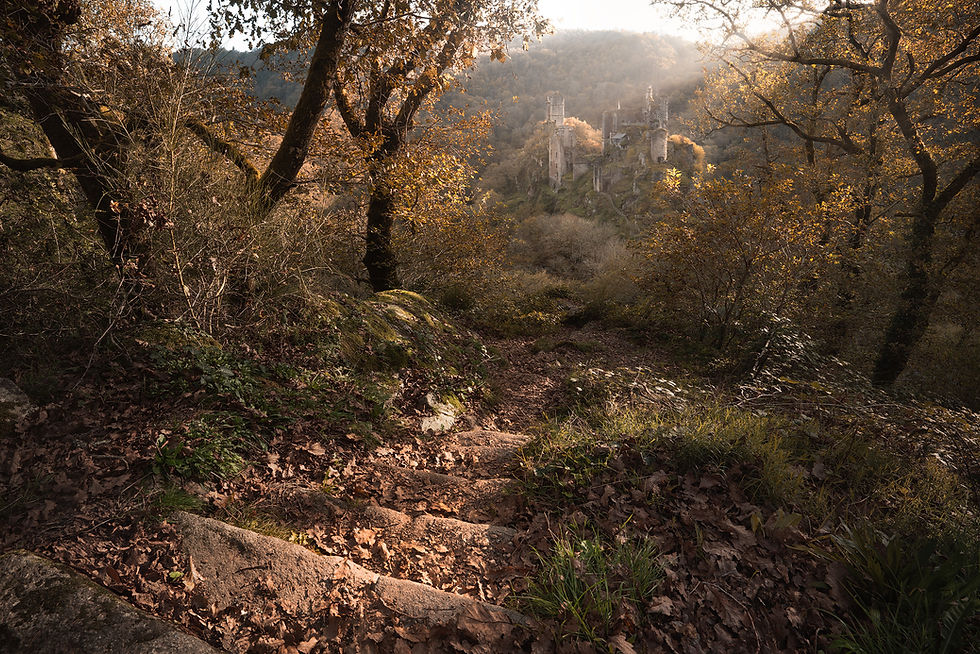
However, after a long time working this way, I began to encounter a fundamental limitation.
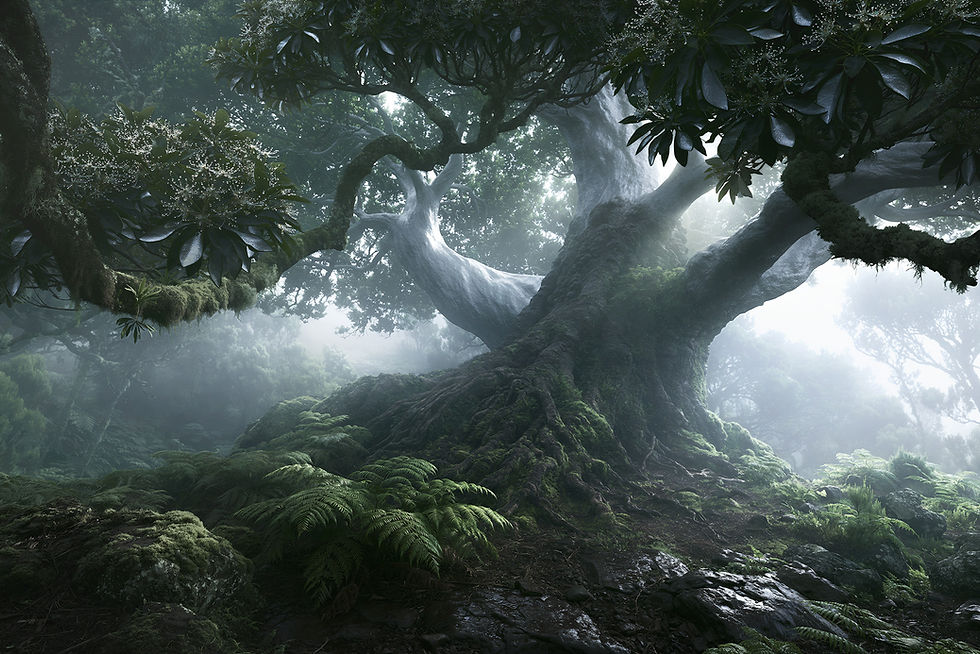
Some of the worlds I imagined simply did not exist in reality.
Certain architectures, atmospheres and environments lived only in my imagination, and there was no way to photograph them.
For a long time these visions remained impossible to realize.
That changed when new creative tools began to appear.
When I first encountered early generative visual technologies, I immediately understood that they could open a completely new creative space. Not as a replacement for photography, but as a way to expand its possibilities.
For the first time it became possible to explore landscapes that had never existed, while still preserving the visual sensibility developed through years of photographic work.
This realization eventually led to the birth of a new project: Midnight Lodge.
Midnight Lodge is not simply a collection of images.
It is an evolving visual world created through a hybrid process combining photography, generative tools and extensive manual editing. The goal of this process is not to showcase technology, but to push the limits of visual storytelling.

Through this approach I began exploring what I call Hybrid Visual Art — a visual language where photography, digital painting and generative imagery merge together to construct fictional worlds with a coherent atmosphere and narrative identity.
Midnight Lodge explores the mystery of a lost spiritual world — fragments of an ancient faith scattered across forgotten landscapes.
Ruined sanctuaries, silent architectures and wandering pilgrims appear as traces of a civilization whose history has almost vanished.
Rather than presenting a complete narrative, the project reveals this world through fragments, allowing the viewer to slowly piece together its mythology.
In this sense Midnight Lodge is not a finished story.
It is an expanding universe where images gradually build a world — one fragment at a time.


Davvero affascinante questo percorso che descrivi! Mi ritrovo molto in quello che dici sulla fotografia come punto di partenza. Per anni ho visto la macchina fotografica come uno strumento per catturare la realtà, un modo per fermare un istante e renderlo tangibile. E in effetti, è incredibile quanta bellezza si possa trovare nel mondo che ci circonda, semplicemente osservando con attenzione e scegliendo l'inquadratura giusta. Però, ultimamente, anch'io sento l'esigenza di andare oltre. La fotografia, per quanto potente, a volte mi sembra un po' statica, un punto di arrivo piuttosto che un trampolino di lancio. L'idea di poter "manipolare" e trasformare quelle immagini, integrandole con altri elementi, magari digitali o pittorici, apre un universo di possibilità creative. È come se…
Questo titolo mi incuriosisce tantissimo! Ho sempre avuto un debole per la fotografia, ma l'idea di un'evoluzione verso un'arte visiva "ibrida" apre scenari affascinanti. Mi chiedo se si tratti di un'integrazione con altre forme d'arte tradizionali, come la pittura o la scultura, oppure se si stia esplorando l'uso di nuove tecnologie digitali che vanno oltre la semplice post-produzione. Ho visto negli ultimi anni artisti che manipolano le immagini fotografiche in modi quasi scultorei o che le infondono di elementi pittorici digitali, creando qualcosa di completamente nuovo. Spero che il post approfondisca proprio questo aspetto, magari con esempi concreti di artisti o progetti che stanno tracciando questa nuova frontiera. La fotografia, nella sua essenza, è sempre stata una forma di interpretazione…