Why I Do Not Photograph to Describe: Landscape Photography, Atmosphere, and Visual Interpretation

There are many ways to photograph a landscape. For some, it is a document. For others, a record of light, geography, weather, or place. My relationship with landscape has never begun there.
I did not begin photographing landscapes to describe them.
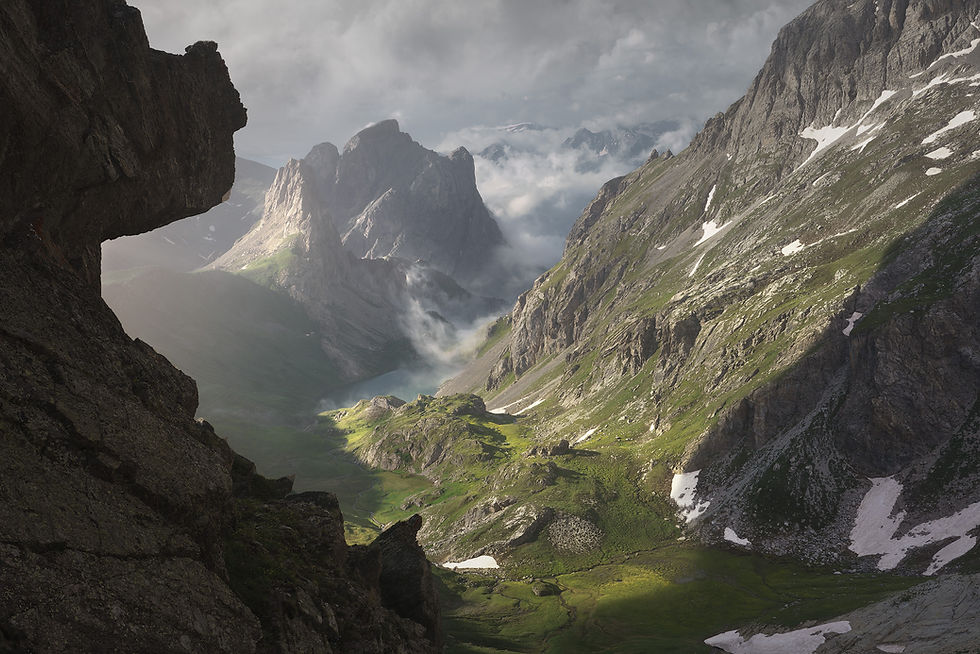
From the beginning, what drew me was not the need to show a place as it is, but the need to respond to what it awakens. What interested me was never simple accuracy, but atmosphere. Not topography, but emotional weight. Not the visible facts of a location, but the strange and often unspoken tension a place can carry when light, silence, memory, and imagination begin to converge.
For me, a landscape is never just a subject to be recorded. It is a presence to be interpreted.
That difference explains almost everything about the way I work. I have never been interested in photography as a neutral act of description. Even when my work was rooted entirely in traditional landscape photography, my goal was never to create a faithful inventory of the world. What I was searching for was something less literal and, in many ways, more difficult to define: an image capable of carrying mood, suggestion, and symbolic resonance.
A place may be real, but the experience of it is never purely factual.
What remains with us after encountering a landscape is rarely a precise visual report. We remember fragments. The pressure of the sky before a storm. The silence of a valley at dawn. The weight of distant mountains. The sensation that, for a brief instant, something ancient or unnamed seemed to inhabit the scene. Memory does not preserve geography with perfect fidelity. It preserves atmosphere. It keeps what mattered emotionally and lets the rest dissolve.
That has always felt closer to the kind of image I want to make.
Some atmospheres never leave you. I first encountered them as a child, long before I had the words to explain them. In films like Excalibur, and later in the elegiac vastness of The Lord of the Rings, I recognized something that felt immediately true to me: the weight of myth, the sacred quality of landscape, the beauty of ruin, the sense that nature itself could become a cathedral. Not a decorative fantasy, but a world charged with reverence, danger, melancholy, and destiny.
That experience stayed with me.

It taught me, very early, that an image could be more than descriptive. It could feel like an apparition. It could suggest that behind the visible world there was another layer, older and deeper, where beauty was inseparable from loss and wonder was touched by sorrow. I think that recognition shaped my visual instincts long before I understood it consciously.
Some images do not explain the world. They reveal that the world is deeper than explanation.
This is also why I have always felt drawn to Romanticism, not simply as an artistic reference, but as a way of feeling. The landscapes that move me most are not merely beautiful. They carry distance, gravity, longing, silence, and the sense of something larger than ourselves. They seem to belong to a world that is both real and somehow already vanishing.
The nostalgia I feel in front of certain landscapes is not nostalgia for the past as history. It is something deeper than that. It is a longing for a world that feels spiritually richer, more mysterious, and more meaningful than the one we inhabit now. A world in which ruins, forests, mountains, mist, and silence are not just scenery, but vessels of memory. A world in which the visible still seems capable of sheltering the invisible.
That is the world I have always searched for in images.
Not the world as inventory, but the world as echo.Not the landscape as evidence, but the landscape as threshold.Not the place as destination, but the place as revelation.
We live in a time dominated by speed. Images explain themselves quickly, consume attention quickly, and disappear just as quickly. In that environment, description easily becomes the default language of photography. This is the place. This is the light. This is what I saw.
I have always been drawn elsewhere.
The landscapes that matter most to me are not simply beautiful locations. They are places that seem to stand on a threshold, where the visible world feels charged by something beyond itself. That presence does not need to be supernatural in any literal sense. It may be memory. It may be myth. It may be the emotional force created when weather, solitude, light, and form come together in a way that exceeds explanation.
This is why I have always felt close to painting, cinema, and visual storytelling, even when working through photography. Not because I reject reality, but because I do not experience reality as flat. I experience it as layered. A place is shaped not only by what is physically present, but also by what the mind projects into it, by what culture has taught us to feel, and by what imagination quietly completes.
For me, landscape photography becomes most powerful when it does more than show a place. It must allow the place to become a vessel for feeling.

This does not mean that craft is secondary. On the contrary, craft matters deeply. Light matters. Composition matters. Timing matters. Technique matters. But none of these things are ends in themselves. They are instruments. They matter only insofar as they help the image carry life.
I am not interested in technical perfection if the image remains emotionally mute.
An image can be sharp, refined, highly detailed, and entirely forgettable. It can present a place with great competence and still fail to leave any lasting trace. What I look for instead is an image that feels inhabited by silence, tension, mystery, and a sense of presence that cannot be reduced to information.
That is why atmosphere has always stood at the center of my work.
Atmosphere is not decoration. It is not a stylistic veil added afterward to make an image feel more dramatic. It is the emotional structure of the image. It is what allows a photograph to move away from mere description and toward interpretation. It is what transforms a location from scenery into experience.
A landscape begins to matter when it stops being a view and becomes a presence.
There is often an assumption, especially in photography, that interpretation somehow weakens truth. I have never believed that.
Interpretation is not a betrayal of reality. It is an acknowledgment that every meaningful image already contains a point of view. The moment an artist chooses where to stand, what to include, what to leave out, when to release the shutter, and how to shape the final image, interpretation has already begun.
The real question is not whether interpretation exists. The real question is whether it is shallow or meaningful.
For me, interpretation becomes meaningful when it serves the inner reality of the image, when it helps reveal the emotional truth that made the place matter in the first place. Sometimes that truth lies in darkness rather than clarity. Sometimes in restraint rather than spectacle. Sometimes in allowing the landscape to remain partly veiled, unresolved, or ambiguous.
I am not trying to force the world into fantasy. I am trying to remain faithful to the depth I genuinely feel in certain places.
I do not want a landscape merely to be seen. I want it to be felt.
I want it to carry silence, distance, and the gravity of old stories, even when no story is being told directly. I want it to suggest that the world is richer than its surface, older than our explanations, and still capable of mystery. I want it to feel less like evidence and more like an encounter.
What I seek is not realism without soul, but reality touched by longing.
This, ultimately, is why I do not photograph to describe.
Description can tell us where something is. It can tell us what it looked like. But it cannot, on its own, explain why certain places continue to haunt us long after we have left them, or why some images remain alive in the mind while others vanish almost immediately.
What I seek is not the inventory of a landscape, but its echo.
And that echo, when it appears, belongs less to geography than to atmosphere, memory, longing, and the enduring human need to find meaning in the world beyond what is immediately visible.


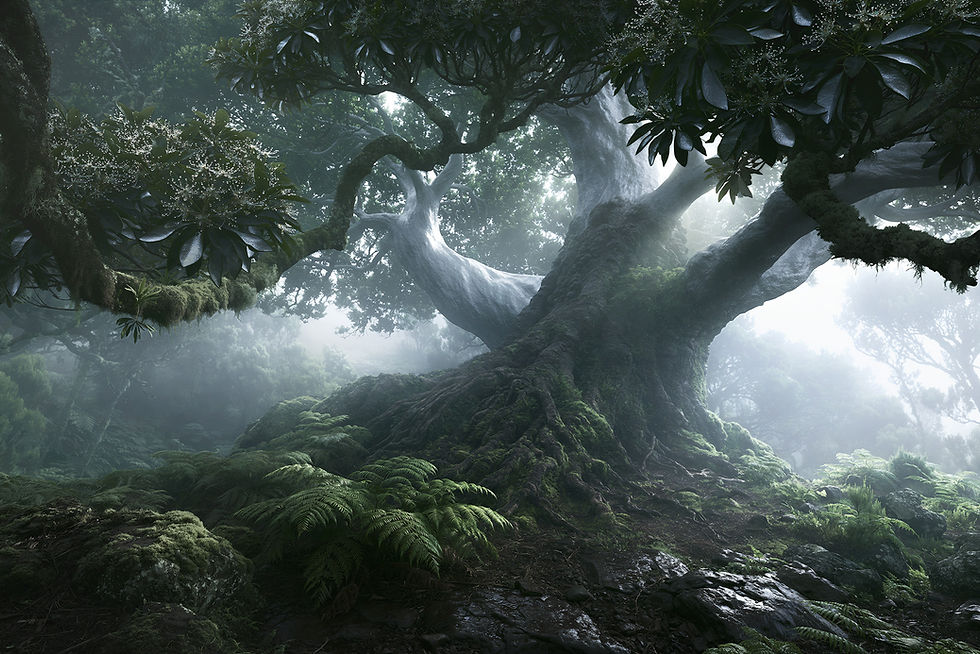
Dear Enrico,
I read your latest article with great attention, and I want to say that I fully understand and appreciate your perspective from an artistic point of view. Your focus on atmosphere, memory, and emotional interpretation rather than mere description strongly resonates with me. I also believe that true landscape photography should go beyond simply documenting a place and instead aim to convey a deeper, more meaningful experience.
At the same time, I would like to share a reflection from my personal perspective. Even within traditional photography, the goal has never really been pure description. Many photographers strive—just as you describe—to create images filled with atmosphere and emotional weight. However, achieving this through traditional means often requires an immense…
Dear Enrico,
I read your latest article with great attention, and I want to say that I fully understand and appreciate your perspective from an artistic point of view. Your focus on atmosphere, memory, and emotional interpretation rather than mere description strongly resonates with me. I also believe that true landscape photography should go beyond simply documenting a place and instead aim to convey a deeper, more meaningful experience.
At the same time, I would like to share a reflection from my personal perspective. Even within traditional photography, the goal has never really been pure description. Many photographers strive—just as you describe—to create images filled with atmosphere and emotional weight. However, achieving this through traditional means often requires an immense…