Black Metal, Melancholy, and the Landscape Within

How extreme music shaped my photographic vision
Some influences do not enter your work as simple references.
They do not appear as a direct quotation, a visible homage, or a stylistic imitation. They do not tell you what to photograph, which colors to use, or how to compose an image. They work in a deeper and more subterranean way. They become part of the emotional weather through which you look at the world.
For me, heavy metal — and especially black metal — has always been one of those forces.
Long before I had a clear language for my photography, before I understood how to shape an image through editing, before I began to define my own approach to atmosphere, melancholy, and dark processing, I was already being educated by music. Not in a technical sense, of course, but in a visual and emotional one.
The sound was only part of it.
There were the covers.The titles.The lyrics.The symbols.The forests.The ruins.The sense of distance.The feeling that the modern world had somehow been stripped away, leaving behind something older, colder, and more severe.
Black metal, especially in its darker and more visceral forms of the 1990s, was not simply a genre of music to me. It was an atmosphere. A world. A way of perceiving beauty through shadow, decay, winter, myth, and spiritual tension.
And that atmosphere stayed with me.
When I think about the first impact of bands like Mayhem, Marduk, or Emperor, what returns to me is not only the sound. It is the sensation of entering a different emotional landscape. Something raw, hostile, cold, and strangely magnetic. There was nothing polite or decorative in that world. It rejected comfort. It rejected softness. It rejected the postcard version of nature and the sentimental idea of beauty.
The nature evoked by that music was not a pleasant background.
It was ancient.Indifferent.Sacred.Threatening.

A forest was not a place for relaxation. It was a place of exile, ritual, danger, and memory. A mountain was not simply a scenic object. It was a border, a monument, a witness. Winter was not just a season. It was a spiritual condition.
That vision had a profound effect on the way I would later approach landscape photography.
I was never truly interested in landscapes as clean views, travel memories, or technically perfect reproductions of famous places. What attracted me was always something else: the feeling that a place could contain a hidden presence. The sensation that beneath the visible surface there was another layer — older, stranger, more solemn.
Black metal helped me recognize that instinct.
It taught me, in a very indirect but powerful way, that darkness is not simply the absence of light.
Darkness can be language.Darkness can be memory.Darkness can be architecture.Darkness can be a spiritual dimension.
This distinction is important, because the word “dark” is often misunderstood in photography. Very often, it is reduced to a look: low exposure, desaturated colors, heavy contrast, deep blacks, dramatic clouds, perhaps a colder color grade. But for me, darkness has never been merely a visual effect. It is not a preset. It is not a trick. It is not a fashionable mood applied at the end of the process.
Darkness, for me, is a way of perceiving the world.

It is connected to solitude, tragedy, memory, ruins, myth, faith, death, longing, and the sublime. It is the emotional gravity that turns a simple landscape into a place of imagination.
Black metal did not teach me to make images darker.
It taught me to look for the darkness already hidden inside the world.
That is a very different thing.
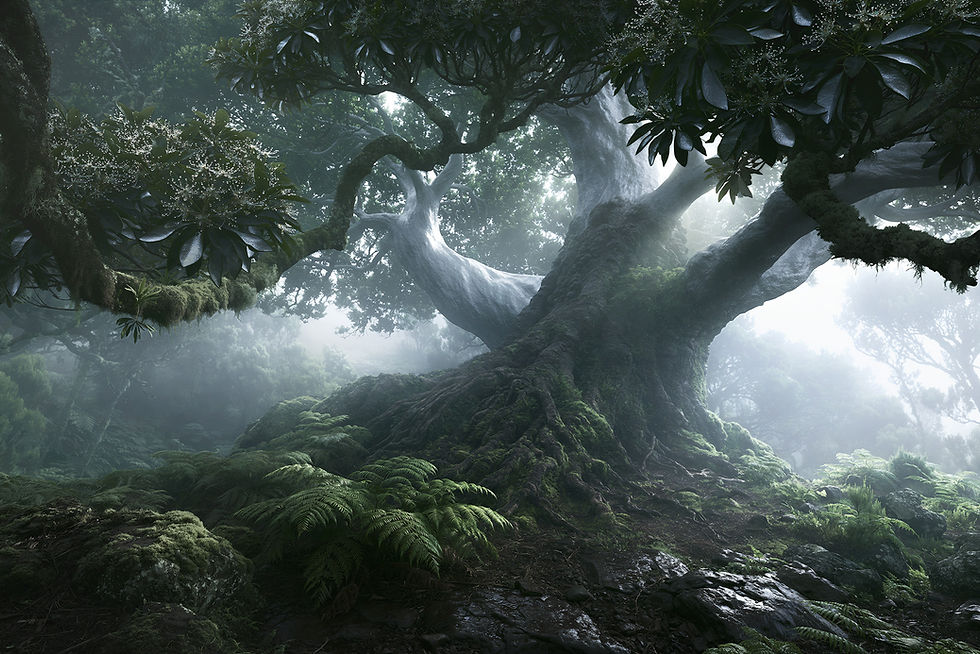
A landscape does not become powerful because we force it into gloom. It becomes powerful when we reveal the tension that was already there: the weight of the sky, the silence of the trees, the violence of the weather, the loneliness of a path, the dignity of an ancient ruin, the melancholy of a valley disappearing into mist.
This is why the genre’s visual culture was so important to me.
The album covers of black metal and extreme metal, especially in the 1990s and early 2000s, often had a strange and lasting power. Many of them were not refined in a conventional sense. They were sometimes grainy, obscure, crude, blurred, or primitive. But they possessed something that is far more difficult to achieve than technical perfection.
They had atmosphere.
A monochrome forest.A castle in fog.A ruined church.A frozen landscape.A figure lost in darkness.A medieval engraving.A distant tower under a dead sky.
These images did not explain themselves. They did not try to be accessible or decorative. They simply opened a door.
That was enough.

I think this had a lasting effect on my understanding of photographic images. A picture does not always need to describe everything. Sometimes its power comes from what it withholds. From the sense that something remains outside the frame. From the feeling that the image is not a conclusion, but an entrance.
A photograph is not only an image.
It is a threshold.
This is also why titles became so important to me.
Metal has always understood the power of naming. A song title, an album title, even a few words printed on a cover can suggest an entire universe before the music begins. The best titles do not simply label something. They summon it.
They can evoke a place, a battle, a curse, a ritual, a memory, a kingdom, a fall.
That sensitivity to language deeply influenced the way I think about my own work. A title can reduce an image to documentation, or it can expand it into myth. It can tell the viewer, “this is where the photo was taken,” or it can suggest, “this is what the image has become.”
I have always been drawn to the second possibility.
This is probably one of the reasons why I rarely think of landscape photography as a purely documentary act. For me, a landscape image is not only about the place. It is about the transformation of the place through vision, memory, and atmosphere.
The real subject is not always the mountain, the forest, the castle, or the storm.
The real subject is the world that appears when those elements begin to resonate with something inside us.

Black metal gave me a language for that resonance long before I could explain it.
It also created a strong link between music, text, image, and atmosphere. This is something I have always found fascinating in the darker branches of metal culture: the elements are not isolated. The sound, the cover, the lyrics, the typography, the title, the mood — everything contributes to the creation of a world.
This has always felt very close to dark fantasy.
Not fantasy as escapism, not fantasy as colorful entertainment, but fantasy as an ancient and symbolic territory. A world of ruins, forbidden paths, fallen kingdoms, sacred wars, lost faiths, and landscapes charged with spiritual meaning.
Within black metal and its related genres, this connection often becomes incredibly powerful. Music is not only music. It becomes a landscape of the mind. A song can suggest an entire visual world without showing a single image. A title can feel like the name of a forgotten place. A melody can carry the sadness of a kingdom that never existed, but somehow feels remembered.
This is something that profoundly shaped my imagination.
When I later began to develop a more personal photographic language, I realized that many of the things I was searching for visually had already been living in that musical world for years: melancholy, vastness, darkness, ritual, medieval echoes, forests, ruins, winter, distance, spiritual conflict, and the feeling of standing before something greater and older than oneself.
Of course, my connection with black metal was never limited to its most raw and brutal side.
The first, visceral impact of the early and darker expressions of the genre was essential, but over time I became equally attached to its more epic, symphonic, and melancholic forms.
Summoning, for example, opened a completely different door.
There, the darkness was not only aggression or hostility. It became distance, longing, and legend. Their music carried the feeling of ancient paths, mountains, fortresses, lost kingdoms, and heroic sadness. It was not simply “dark” in a violent sense. It was mournful, vast, and deeply evocative.
In that world, the landscape was not a background.
The landscape was the story.
That idea is central to my photography.

A valley can become a kingdom.A forest can become a cathedral.A ruined tower can become the remnant of a fallen age.A mountain under storm clouds can become the border of a mythological world.
Other bands moved that darkness in different directions. Limbonic Art, Naglfar, Dimmu Borgir, and many others brought more theatrical, symphonic, or monumental elements into the picture. The emotional field expanded. Darkness became grander, more ceremonial, sometimes almost cinematic.
That too entered my visual imagination.
Not literally. I never wanted to recreate album covers with a camera. I never wanted my photography to become an illustration of metal aesthetics. The influence was more internal than that. It shaped my taste for scale, drama, solemnity, and emotional intensity.
It made me understand that an image could be severe and beautiful at the same time.
That beauty does not need to be comforting.
This is one of the most important lessons I absorbed from black metal and from the wider dark imagination connected to it. Beauty can be cold. It can be tragic. It can be uncomfortable. It can live in ruins, in winter, in silence, in decay, in the feeling of standing before something immense and unknowable.
That idea also connects deeply with my love for Romantic painting, fantasy literature, cinema, and northern European atmospheres. In my mind, these things have never been separate. Caspar David Friedrich, Tolkien, medieval ruins, Howard Shore, Excalibur, stormlight, old forests, gothic architecture, and black metal all belong to the same inner geography.
They are different doors into the same landscape.
A landscape where nature is not merely beautiful, but sacred and terrifying.A landscape where ruins are not dead, but full of memory.A landscape where darkness is not emptiness, but depth.
This is the territory I have always tried to reach in my work.
And the influence of music is not limited to imagination. It also belongs to the actual process of creating an image.
During many editing sessions, certain songs and albums have played a concrete role in helping me enter the right state of concentration. Not as casual background music, but almost as a form of emotional alignment.
Editing, for me, is not only technical work.
It is interpretation.
It is the slow construction of atmosphere. It is the moment in which the raw material of the photograph begins to move toward the image I had felt, imagined, or sensed. It requires precision, but also immersion. It requires decisions, but also surrender. You need to remain inside the emotional climate of the image long enough to understand what it is asking to become.
Certain pieces of music helped me do that.
They gave me the concentration necessary to push an image toward a very specific result: something defined, melancholic, coherent, and emotionally charged. They helped me maintain the inner temperature of the work. They created continuity between what I was seeing, what I was feeling, and what I was building through the editing process.
In those moments, music was not decoration.
It was part of the ritual.
Some records were not merely influences. They were companions in the process.
They helped create the silence I needed inside the noise.
That may sound paradoxical, especially when speaking about extreme music, but it is true. There is a kind of concentration that certain intense music can create. It blocks out the irrelevant. It narrows the world. It allows you to enter a deeper corridor of attention.
For a photographer who works heavily with atmosphere, this is essential.
Because atmosphere is fragile. It can easily become artificial. It can become theatrical in the wrong way, or heavy-handed, or simply decorative. To build atmosphere properly, you need coherence. Every decision matters: contrast, light, color, texture, detail, shadow, depth, the way the eye moves through the frame.

Music helps me stay faithful to that coherence.
Not because it tells me what to do, but because it keeps me in contact with the emotional truth I am trying to reveal.
And this, perhaps, is the most important point.
The darkness in my images is not there to impress. It is not there to appear dramatic. It is not there to make a place look “cool” or “moody.” It is there because, for me, certain landscapes contain a kind of hidden melancholy that deserves to be brought forward.
I never wanted my landscapes to look dark.
I wanted them to feel as if they had listened to the same music I had.
There is a difference.
One is style.The other is vision.
This is also why I have always felt distant from a purely touristic or documentary approach to landscape photography. Famous locations, beautiful sunsets, dramatic peaks, and perfect reflections can be visually impressive, but they are not enough for me.
A beautiful landscape is not enough.A spectacular sunset is not enough.A famous location is not enough.
What matters is whether the image carries weight.
Does it feel inhabited by memory? Does it suggest something beyond itself?Does it remain with you after you stop looking?Does it open a door toward myth, silence, melancholy, or mystery?
That is what I search for.
Black metal helped me understand this search. It gave me permission, in a sense, to value the severe, the melancholic, the obscure, and the spiritually charged. It helped me understand that the world does not need to be softened in order to become meaningful. Sometimes it must be made harsher, colder, deeper — closer to the emotional truth that was already there.
This has inevitably influenced not only my photography, but also the way I think about my broader visual universe.
It is one of the hidden roots of The Midnight Lodge.
I would not describe The Midnight Lodge as a project directly inspired by metal. That would be too simple, and probably misleading. Its origins are broader: photography, dark fantasy, Romanticism, worldbuilding, cinema, painting, memory, and years of personal imagination.
But it certainly shares something with the black metal imagination.
It shares a sense of sacred darkness.A fascination with lost worlds.A feeling of ancient spiritual conflict.A love for ruins, rituals, relics, forests, stone, winter, and monumental silence.A belief that beauty and terror can belong to the same temple.
In that sense, black metal is not an external reference.
It is part of the spiritual architecture.
It is part of the atmosphere from which these images emerge.
The same is true for my landscape photography. Even when there is no obvious connection to music, even when the subject is simply a valley, a forest, a mountain, or a castle, the influence remains present in the way I interpret the scene.
I do not look for darkness as an effect.
I look for the point where the landscape begins to feel like an echo of something older.
That may be why I am drawn to ruins. Why I love stormlight. Why forests, when treated with the right atmosphere, can feel almost sentient. Why a path disappearing into shadow can become more powerful than a panoramic view. Why a lonely mountain under a dark sky can feel more alive than a perfect sunset.

The world, to me, is full of thresholds.
Photography allows me to reveal them.
And music — especially the music that shaped my imagination in the deepest years — helped me recognize them.
I think many people who grew up with powerful music understand this, even if their genre was different. Certain records become part of your inner landscape. They are not simply things you listened to. They become rooms inside you. They change the way you walk through the world. They give form to emotions you could not yet define.
For me, black metal did that through darkness, melancholy, and atmosphere.
It gave me a sense of beauty that was not clean, not easy, not comfortable. A beauty made of distance, coldness, memory, and shadow. A beauty closer to a ruin than to a flower. Closer to a winter forest than to a summer field. Closer to a cathedral at night than to a postcard view.
And this is still the beauty I trust the most.
Because it does not ask to be consumed quickly.
It asks to be entered.
It asks for attention, patience, and silence. It asks the viewer to accept that not everything beautiful must be bright, and not everything dark must be negative.
Darkness can preserve mystery.Darkness can protect depth from banality.Darkness can turn landscape into vision.
This is the point where music and photography meet for me.
Both can create atmosphere.Both can open inner worlds.Both can transform melancholy into form.Both can make us feel that reality is larger, older, and stranger than what appears on the surface.
In the end, black metal did not give me a visual formula.
It gave me a sensitivity.
A way of listening to landscapes.A way of reading shadows.A way of sensing myth inside stone, forest, and weather.
For me, photography has never been only about showing the world as it appears. It has always been about revealing the world as it feels when imagination, memory, music, and shadow pass through it.
And somewhere in that shadow — between a distant mountain, a ruined cathedral, a winter forest, and the echo of an old black metal record — I found the atmosphere that still guides much of my work today.


Un titolo davvero evocativo. L'accostamento tra black metal, malinconia e il paesaggio interiore è qualcosa che mi risuona profondamente. Ho sempre trovato che la musica, specialmente quella più oscura e introspettiva, abbia la capacità unica di dare forma a sentimenti che altrimenti rimarrebbero nebulosi. Il black metal, in particolare, con la sua atmosfera spesso gelida e i suoi temi esistenziali, riesce a creare un ponte diretto verso quelle parti di noi che sono più difficili da esprimere a parole. È quasi come se certe melodie e certe dissonanze riuscissero a scavare nel profondo, facendo emergere un paesaggio interiore fatto di ombre, riflessioni e a volte anche di una strana forma di bellezza catartica. È un viaggio che non è sempre…
Ciao! Ho letto il tuo articolo e mi ha davvero colpito. È uno di quelli che non vedo l'ora di condividere con un amico, perché penso che troverebbe le tue riflessioni altrettanto interessanti. Sottoscrivo in pieno quando dici che questo argomento merita molta più attenzione, soprattutto per quanto riguarda il black metal in sé. Hai fatto un lavoro impeccabile nel documentare tutto, complimenti davvero. Mi ha fatto pensare molto alla mia personale esperienza con questo genere. È affascinante come certi paesaggi sonori possano rispecchiare stati d'animo così profondi. Mi chiedo se questo legame tra musica e ambiente sia così marcato in tutte le scene black metal, o se ci siano sfumature particolari che emergono in contesti diversi. In ogni caso,…
I stumbled upon this blog and I'm glad I did https://en.wikipedia.org/wiki/Blog The quality of writing and the depth of analysis is impressive. Will definitely explore more of your posts.